Halal Certification In Riyadh
Halal Certification in Riyadh helps businesses ensure their products comply with Islamic dietary laws and are suitable for halal consumption.
Halal Certification in Riyadh helps businesses ensure their products comply with Islamic dietary laws and are safe for halal consumption. It is widely used in food, beverages, cosmetics, and pharmaceutical industries, ensuring that products are prepared, processed, and handled according to halal guidelines.
To get Halal certification, companies must verify raw materials, follow approved processing methods, maintain cleanliness, and avoid contamination with non-halal substances. Regular inspections and audits are conducted by certification bodies to ensure compliance.
Halal certification not only builds customer trust, especially among Muslim consumers, but also increases market opportunities locally and internationally. It enhances brand reputation and shows commitment to quality, safety, and ethical practices, helping businesses grow and compete in global halal markets.
What Is ISO Halal Certification
Halal Certification in Riyadh is a process that ensures products and services comply with Islamic laws and are suitable for halal use or consumption. It is mainly important for food and beverages, but also applies to cosmetics, pharmaceuticals, and other products.
In simple words, halal certification means that a product is prepared, processed, and handled according to Islamic guidelines. This includes using halal ingredients, maintaining cleanliness, and avoiding any contact with non-halal substances.
Halal certification is very important in Riyadh, where there is a high demand for halal-compliant products. It helps businesses build trust with customers, meet religious requirements, and expand into local and international halal markets.
Why is Halal Certification Important In Riyadh?
Halal Certification in Riyadh is important because it ensures products meet Islamic laws and are safe for halal consumption. In a city like Riyadh, where halal compliance is essential, businesses must follow strict guidelines to gain customer trust and operate successfully.
Halal certification provides a clear system to verify ingredients, production processes, and hygiene standards. It helps businesses avoid contamination with non-halal substances and ensures full compliance with religious requirements.
Here are some key reasons why it is important:
- Meets religious requirements: Ensures products follow Islamic guidelines
- Builds customer trust: Consumers prefer certified halal products
- Ensures product integrity: Maintains proper sourcing and processing standards
- Expands market opportunities: Opens access to local and global halal markets
- Enhances brand reputation: Shows commitment to quality and ethical practices
- Ensures compliance: Helps meet regulatory and certification requirements
In simple words, Halal certification is not just a requirement—it helps businesses build trust, ensure quality, and grow in a halal-focused market.
Why Halal Certification Is the Most Popular in Riyadh
Halal Certification in Riyadh is highly popular because it is closely connected to religious, cultural, and legal requirements in the region.
Here are the main reasons for its popularity:
- Religious importance: Halal compliance is essential for Muslim consumers
- High market demand: Most customers prefer certified halal products
- Government and regulatory focus: Businesses must follow halal standards
- Builds strong customer trust: Certification assures authenticity and quality
- Expands global halal market access: Helps export to other halal-focused countries
- Applies to multiple industries: Food, cosmetics, pharmaceuticals, and more
How To Halal Certification In Riyadh- 3 Simple Steps
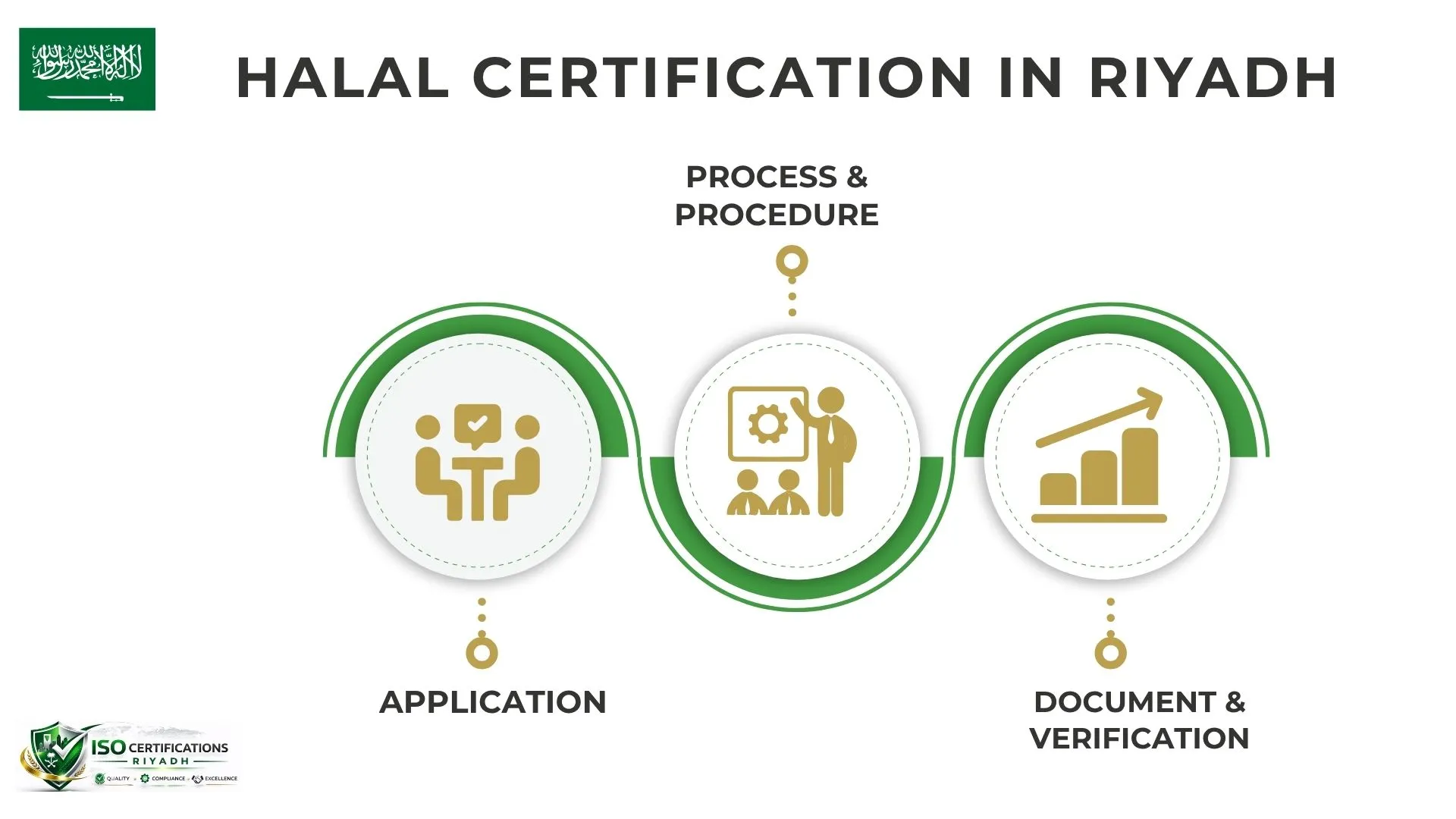
Halal Certification Process In Riyadh 2026
The Halal certification process helps businesses ensure their products follow Islamic laws and are safe for halal use. In 2026, the process is simple when followed step by step:
- Application Submission: Submit company and product details to a recognized halal certification body
- Ingredient Verification: Check all raw materials to ensure they are halal and free from prohibited substances
- Process Review: Evaluate production methods, handling, and storage to prevent contamination
- Facility Inspection: Inspect the production site to ensure cleanliness and proper hygiene standards
- Documentation: Prepare records of ingredients, suppliers, and processes
- Certification Audit: An external auditor verifies compliance with halal requirements
- Certification Approval: Once approved, the company receives halal certification
- Ongoing Compliance: Regular inspections are conducted to maintain certification
The PDCA Cycle (Plan-Do-Check-Act) – The Heart of HALAL
PLAN
Objective: Define goals and processes
Riyadh example: Plan production to meet client delivery time
DO
Objective: Implement and record processes
Riyadh example: Conduct daily quality checks
CHECK
Objective: Monitor and measure results
Riyadh example: Review customer feedback
ACT
Objective: Take action for improvement
Riyadh example: Adjust workflow to reduce waste
Why Should Riyadh Companies Get Halal Certified?
- Meets religious requirements: Ensures products follow Islamic laws and are suitable for halal use
- Builds customer trust: Customers feel confident buying certified halal products
- Increases market demand: Halal products are highly preferred in Riyadh and across Saudi Arabia
- Expands business opportunities: Opens access to global halal markets and export opportunities
- Enhances brand reputation: Shows commitment to quality, ethics, and compliance
- Ensures product integrity: Maintains proper sourcing, handling, and hygiene standards
Benefits of Halal Certification in Riyadh
Halal certification helps businesses ensure their products meet Islamic requirements while improving quality and trust. It is especially important in a market like Riyadh, where halal compliance is essential.
- Ensures halal compliance: Confirms products follow Islamic guidelines
- Builds customer trust: Consumers prefer certified halal products
- Expands market reach: Opens opportunities in local and global halal markets
- Improves product quality: Ensures proper sourcing and hygiene standards
- Enhances brand reputation: Shows commitment to ethical and quality practices
- Increases sales potential: Attracts a larger customer base
- Ensures regulatory compliance: Meets local and international halal standards
- Supports business growth: Helps companies grow in a competitive market
Industries That Need Halal Certification in Riyadh
Halal certification is essential for industries that produce, handle, or supply products that must comply with Islamic guidelines. In Riyadh, many sectors require halal certification to meet customer expectations and legal requirements.
- Food & Beverage Industry: Ensures halal ingredients, processing, and hygiene
- Restaurants & Catering: Maintains halal food preparation and handling
- Meat & Poultry Processing: Requires proper halal slaughtering methods
- Dairy & Beverage Companies: Ensures products are free from non-halal substances
- Cosmetics & Personal Care: Uses halal-approved ingredients and processes
- Pharmaceutical Industry: Ensures medicines meet halal compliance
- Food Packaging & Logistics: Prevents contamination during storage and transport
- Retail & Supermarkets: Provides halal-certified products to customers
Cost Of Halal Certification In Riyadh?
The cost of Halal certification in Riyadh depends on factors like business size, number of products, type of industry, and complexity of processes. Food manufacturing or meat processing companies may have higher costs due to strict inspection and compliance requirements.
The total cost usually includes application fees, ingredient verification, facility inspection, documentation, and certification audit charges. If multiple products are involved, the cost may increase.
Top 5 Halal Consultants In Riyadh ?
Here are some trusted Halal consultants in Riyadh that help businesses achieve certification smoothly and efficiently:
- ShineCert: Provides complete Halal consulting, documentation, training, and certification support
- ISO Certifications Riyadh: Offers end-to-end Halal certification services with simple and fast processes
- Jedha: Known for professional consulting and helping businesses meet Halal standards
- Neom Al Madina: Supports companies with Halal implementation and compliance solutions
- Local Halal Consultants in Riyadh: Many experienced local firms provide customized Halal certification services based on business needs
These consultants assist with ingredient verification, documentation, process setup, audits, and certification, making the entire process easier and more reliable for businesses.
Why Choose ISO Certifications Riyadh.com for Halal in Riyadh?
ISO Certifications Riyadh.com is a trusted partner for businesses looking to achieve Halal certification in a simple and reliable way. They provide complete support, including ingredient verification, documentation, process guidance, and full audit assistance to ensure compliance with halal standards.
Their team focuses on practical solutions to help businesses maintain hygiene, avoid contamination, and meet all religious and regulatory requirements. With strong local experience and understanding of Riyadh’s market, they ensure a smooth and fast certification process.
Choosing them helps companies save time, reduce effort, and confidently achieve Halal certification while building trust and expanding in halal markets.
Get Halal Certified with Confidence
Build trust in your products and expand your market opportunities with professional Halal Certification support from ShineCert. We help businesses understand certification requirements, prepare documentation, and work toward recognized Halal compliance.
Start Your ISO Certification in Riyadh Today
Get expert guidance, fast approval, and internationally recognized ISO certification for your business in Saudi Arabia.
FAQs
What is Halal certification in Riyadh?
Halal certification ensures that products follow Islamic laws and are safe for halal use or consumption.
How can I get Halal certification in Riyadh?
You need to verify ingredients, follow halal processes, maintain hygiene, and pass a certification audit.
How much does Halal certification cost in Riyadh?
The cost depends on business size, number of products, and type of industry.
Which industries need Halal certification in Riyadh?
Food, restaurants, meat processing, cosmetics, and pharmaceuticals commonly require halal certification.
How long does it take to get Halal certification in Riyadh?
It usually takes a few weeks to 1–2 months, depending on your company’s readiness.