
Halal Certification in Jeddah, Saudi Arabia
Halal Certification in Jeddah helps businesses ensure their products, ingredients, and production processes comply with Islamic dietary laws and halal requirements.
Halal Certification in Jeddah helps businesses ensure their products, ingredients, processes, and supply chain activities comply with recognized halal requirements. It is widely adopted by food manufacturers, restaurants, catering companies, cosmetics brands, pharmaceutical organizations, logistics providers, and export-focused businesses seeking to meet customer and regulatory expectations.
A properly implemented Halal certification system improves product credibility, strengthens customer trust, enhances traceability, and supports access to local and international halal markets. It also helps organizations maintain hygiene standards, improve supplier control, reduce compliance risks, and demonstrate commitment to quality, transparency, and halal compliance across their operations.
What is Halal Certification?
Halal Certification is a compliance process that verifies products, ingredients, handling practices, storage conditions, and supply chain activities meet recognized halal requirements. It is especially important for businesses in Jeddah operating in food production, hospitality, cosmetics, pharmaceuticals, logistics, and consumer goods industries.
In practical business environments, Halal Certification helps organizations strengthen:
- Ingredient sourcing and verification
- Supplier monitoring and control
- Hygiene and sanitation practices
- Contamination prevention measures
Many businesses pursue Halal Certification to meet customer expectations, support export opportunities, improve supplier traceability, and maintain consistent halal compliance across operations.
Why Businesses in Jeddah are Implementing Halal Certification
Jeddah continues to grow as a major food, hospitality, logistics, manufacturing, and export hub within Saudi Arabia. Food manufacturers, restaurants, catering companies, hospitality providers, cosmetics businesses, exporters, and pharmaceutical companies are increasingly expected to maintain structured Halal compliance practices and stronger operational traceability.
Many organizations initially pursue Halal Certification in Jeddah because:
- customers prefer certified Halal products
- retailers require certified suppliers
- export markets demand Halal compliance
- operational traceability becomes difficult
- contamination risks increase across operations
- supplier visibility is weak
- customer confidence becomes harder to maintain
- multinational customers expect structured compliance systems
However, organizations that gain the most value from Halal Certification are usually those that integrate compliance practices into daily operational activities rather than treating certification only as a documentation exercise.
A practical Halal compliance framework helps organizations improve:
- ingredient traceability
- supplier monitoring
- hygiene visibility
- operational accountability
- contamination prevention
- process consistency
- operational transparency
- customer confidence
For many food manufacturers, hospitality businesses, catering operations, cosmetics companies, and exporters in Saudi Arabia, Halal Certification also strengthens credibility during supplier evaluations and international market expansion discussions.
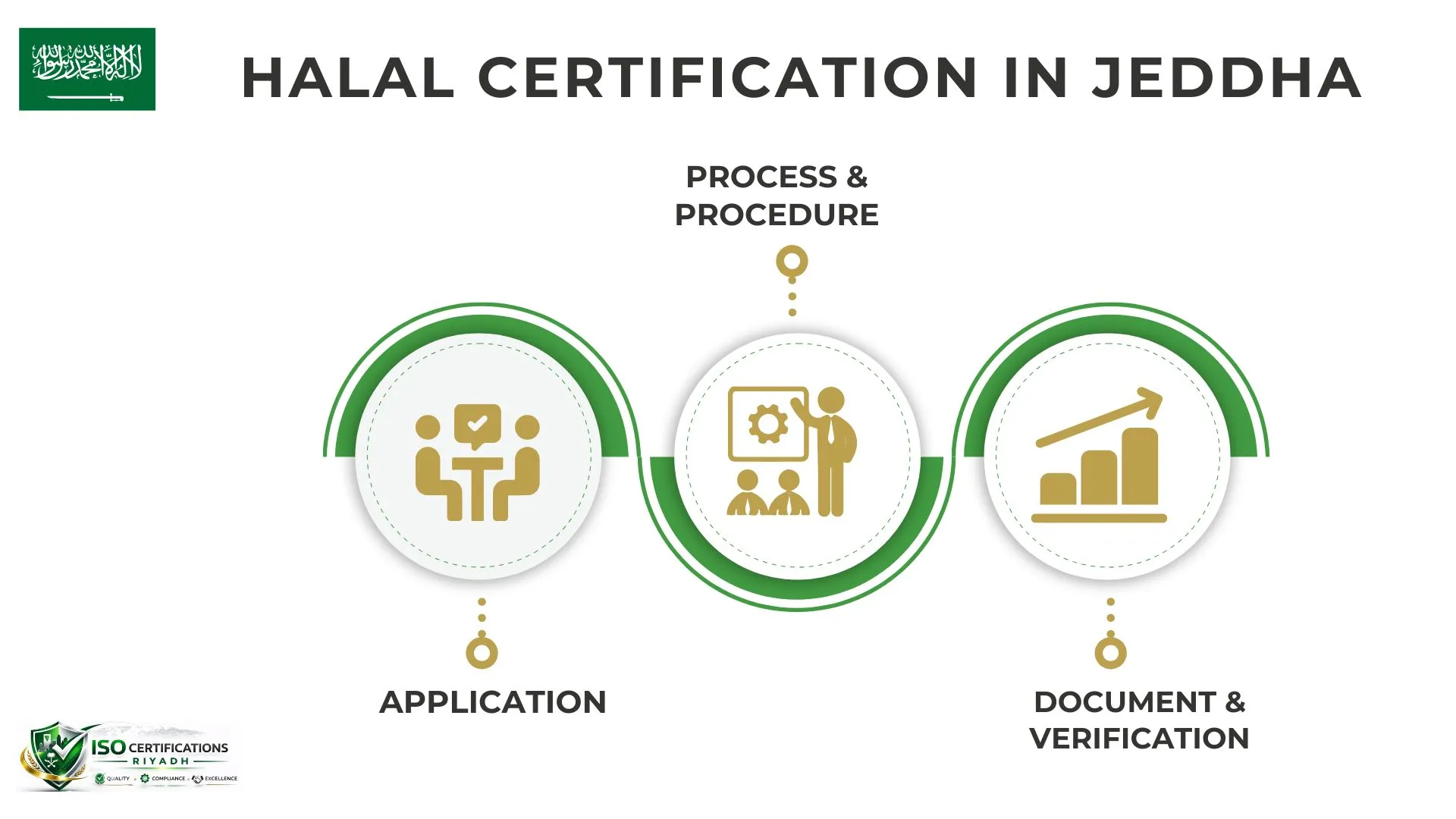
How To Get Halal Certification In Jeddha- 3 Simple Steps ?
Halal Certification for Different Industries in Jeddah
Different industries face different operational risks and Halal compliance challenges. Because of this, Halal implementation should always align with the organization’s operational environment and product exposure.
- Food Manufacturing Companies: Food manufacturers in Jeddah often implement Halal Certification to improve ingredient traceability, strengthen hygiene controls, improve supplier verification practices, reduce contamination risks, and strengthen operational monitoring across production activities.
- Restaurants & Catering Businesses: Restaurants and catering companies implement Halal Certification to improve food handling practices, strengthen hygiene controls, improve storage visibility, and improve operational accountability across food preparation activities.
- Hospitality & Hotel Operations: Hotels and hospitality businesses implement Halal Certification to improve operational consistency, supplier traceability, hygiene visibility, and customer confidence across hospitality food service environments.
- Cosmetics & Consumer Product Companies: Cosmetics manufacturers and consumer product companies increasingly implement Halal Certification to improve ingredient verification practices, strengthen supplier controls, improve operational transparency, and support customer expectations around Halal-compliant products.
- Pharmaceutical & Healthcare Product Businesses: Pharmaceutical companies and healthcare product manufacturers implement Halal Certification to strengthen ingredient traceability, improve production visibility, strengthen operational controls, and support regulated product handling practices.
Our Practical Halal Certification Approach
At ISO Certifications Riyadh, our implementation approach focuses on helping businesses establish practical Halal compliance systems aligned with real operational activities, supply chain processes, and product handling environments.
Instead of creating excessive documentation that operational teams rarely follow, we help organizations build systems that improve traceability visibility, strengthen operational controls, and support long-term compliance reliability.
- Compliance Assessment & Product Review
Every Halal implementation begins with understanding how the organization currently manages ingredients, suppliers, production activities, hygiene practices, storage controls, and operational traceability.
During this stage, we evaluate:
- ingredient sourcing practices
- supplier compliance visibility
- production workflows
- hygiene controls
- contamination risks
- storage & handling activities
- operational traceability
- compliance obligations
The objective is to identify operational gaps and establish a practical implementation roadmap aligned with the organization’s business activities and product categories.
- Documentation, Operational Controls & Compliance Implementation
Once implementation gaps are identified, we help organizations establish practical Halal compliance controls aligned with operational activities.
This typically includes:
- Halal policies
- SOPs
- ingredient verification controls
- supplier approval mechanisms
- traceability procedures
- hygiene controls
- operational monitoring practices
- employee awareness activities
During implementation, operational teams are guided on integrating compliance practices into day-to-day workflows to improve operational consistency and reduce contamination or traceability risks.
- Certification Audit & Continual Compliance Support
Once the organization is operationally prepared, the Halal certification audit process is coordinated with the certification body.
During this stage, we support organizations with:
- certification audit preparation
- audit coordination
- corrective action support
- nonconformity closure
- compliance review activities
However, certification should never be viewed as the final objective.
Organizations that gain the most value from Halal Certification are usually those that continue improving operational controls, supplier monitoring, traceability visibility, and compliance practices after certification is completed.
Benefits of Halal Certification for Businesses in Jeddah
A properly implemented Halal compliance framework provides operational and commercial value beyond certification itself.
- Improved Customer Confidence: Customers increasingly prefer businesses that demonstrate structured Halal compliance practices and operational transparency across production and supply chain activities.
- Better Ingredient & Supplier Traceability: Halal Certification helps organizations improve supplier monitoring practices, strengthen ingredient visibility, improve traceability controls, and reduce operational compliance risks.
- Stronger Export & Market Credibility: Many retailers, distributors, hospitality businesses, and international markets increasingly prefer or require certified Halal suppliers. Halal Certification strengthens credibility during supplier onboarding, export evaluations, and customer qualification reviews.
- Improved Hygiene & Operational Controls: Organizations implementing Halal compliance frameworks often improve hygiene monitoring, operational accountability, contamination prevention practices, and process consistency across operational activities.
- Better Audit & Compliance Readiness: Halal Certification helps businesses maintain structured documentation, operational evidence, and monitoring systems that improve audit preparedness and strengthen compliance confidence.
- Reduced Operational & Compliance Risks: As supply chains become more complex, Halal Certification helps businesses identify compliance risks earlier, strengthen operational controls, reduce recurring operational issues, and support long-term business stability.
Cost Of Halal Certification In Jeddah?
The cost of Halal certification in Jeddah depends on several factors, including the size of the business, number of products, production processes, supplier network complexity, and the industry involved. Food manufacturers, restaurants, catering companies, cosmetics producers, pharmaceutical organizations, and export-focused businesses may have different certification costs based on their operational requirements.
The overall investment typically includes application review, ingredient verification, supplier assessments, documentation preparation, facility inspections, compliance audits, and certification fees. Additional costs may apply if organizations need to improve existing hygiene controls, traceability systems, or halal compliance procedures before certification.
Why Businesses Choose ISO Certifications Riyadh for Halal Certification in Jeddah
Organizations across Saudi Arabia choose ISO Certifications Riyadh because our consulting approach focuses on practical operational compliance rather than generic documentation templates.
We understand that operational challenges vary significantly between food manufacturers, restaurants, hospitality businesses, cosmetics companies, pharmaceutical operations, exporters, and consumer product businesses.
Because of this, our Halal consulting approach focuses on:
- practical compliance controls
- operational integration
- traceability visibility
- supplier monitoring
- hygiene management
- audit readiness
- employee awareness
- continual compliance improvement
Rather than creating systems that exist only for certification audits, we help organizations establish practical Halal compliance frameworks that support real operational reliability and long-term customer confidence.
Start Your ISO Certification in Riyadh Today
Get expert guidance, fast approval, and internationally recognized ISO certification for your business in Saudi Arabia.
FAQs
What is the purpose of Halal Certification?
Halal Certification helps organizations establish structured operational controls focused on ingredient verification, supplier monitoring, traceability, hygiene management, contamination prevention, and compliance assurance.
Which industries commonly implement Halal Certification in Saudi Arabia?
Halal Certification is widely implemented across food manufacturing, restaurants, catering services, hospitality operations, cosmetics companies, pharmaceutical businesses, exporters, and consumer product industries.
Is Halal Certification mandatory in Saudi Arabia?
Halal Certification requirements vary depending on the product category, industry sector, customer expectations, and export market requirements. Many retailers, distributors, hospitality businesses, and international markets strongly prefer or require certified products.
How long does the Halal Certification process take?
Implementation timelines depend on organization size, operational complexity, supplier networks, product categories, and existing compliance maturity.
Do you provide Halal consulting services across Saudi Arabia?
Yes. We provide Halal consulting, compliance implementation support, internal audits, documentation development, awareness training, and certification preparation services across Jeddah and throughout Saudi Arabia.