
ISO 45001 Certification in Jubail, Saudi Arabia
Occupational Health & Safety Management System Consulting Services for Industrial, Manufacturing and Petrochemical Businesses
ISO 45001 Certification in Jubail helps organizations establish a robust Occupational Health and Safety Management System (OHSMS) to create safer workplaces, reduce occupational risks, and protect employees, contractors, and visitors. As one of Saudi Arabia’s leading industrial and petrochemical centers, Jubail is home to industries where workplace safety is a critical business priority. ISO 45001 provides a structured framework for identifying hazards, assessing risks, implementing preventive controls, and promoting a proactive safety culture across all levels of the organization. Businesses in Jubail across sectors such as petrochemicals, oil and gas, manufacturing, construction, engineering, logistics, and industrial services implement ISO 45001 to improve safety performance and meet legal and regulatory requirements. The certification process includes risk assessments, policy development, employee training, system implementation, internal audits, and certification audits. Achieving ISO 45001 certification helps reduce workplace incidents, improve operational efficiency, strengthen compliance, and enhance employee confidence, supporting sustainable business growth and long-term organizational success in Jubail.
What is ISO 45001:2018 Certification?
ISO 45001:2018 is an internationally recognized Occupational Health & Safety Management System standard designed to help organizations establish structured workplace safety controls, improve hazard monitoring visibility, reduce operational safety risks, and support continual workplace safety improvement.
In industrial environments, ISO 45001 helps organizations move away from reactive incident management toward a more structured and preventive operational safety framework.
Many industrial companies in Dammam begin implementing ISO 45001 after facing recurring workplace safety challenges such as:
- unsafe operational practices
- weak contractor safety visibility
- recurring workplace incidents
- inconsistent PPE compliance
- operational hazard exposure
- poor incident reporting visibility
- weak corrective action monitoring
- safety audit nonconformities
As industrial operations expand, managing workplace safety responsibilities across project sites, subcontractors, operational teams, warehouses, production environments, and high-risk industrial activities often becomes increasingly difficult.
Without structured safety controls, organizations frequently struggle with:
- recurring workplace incidents
- operational safety gaps
- contractor safety inconsistencies
- unsafe operational behaviors
- weak hazard visibility
- operational downtime risks
- regulatory compliance concerns
- industrial audit preparedness gaps
A properly implemented ISO 45001 system helps industrial businesses establish stronger workplace safety discipline, improve operational risk visibility, strengthen workforce accountability, and reduce recurring workplace incidents across industrial environments.
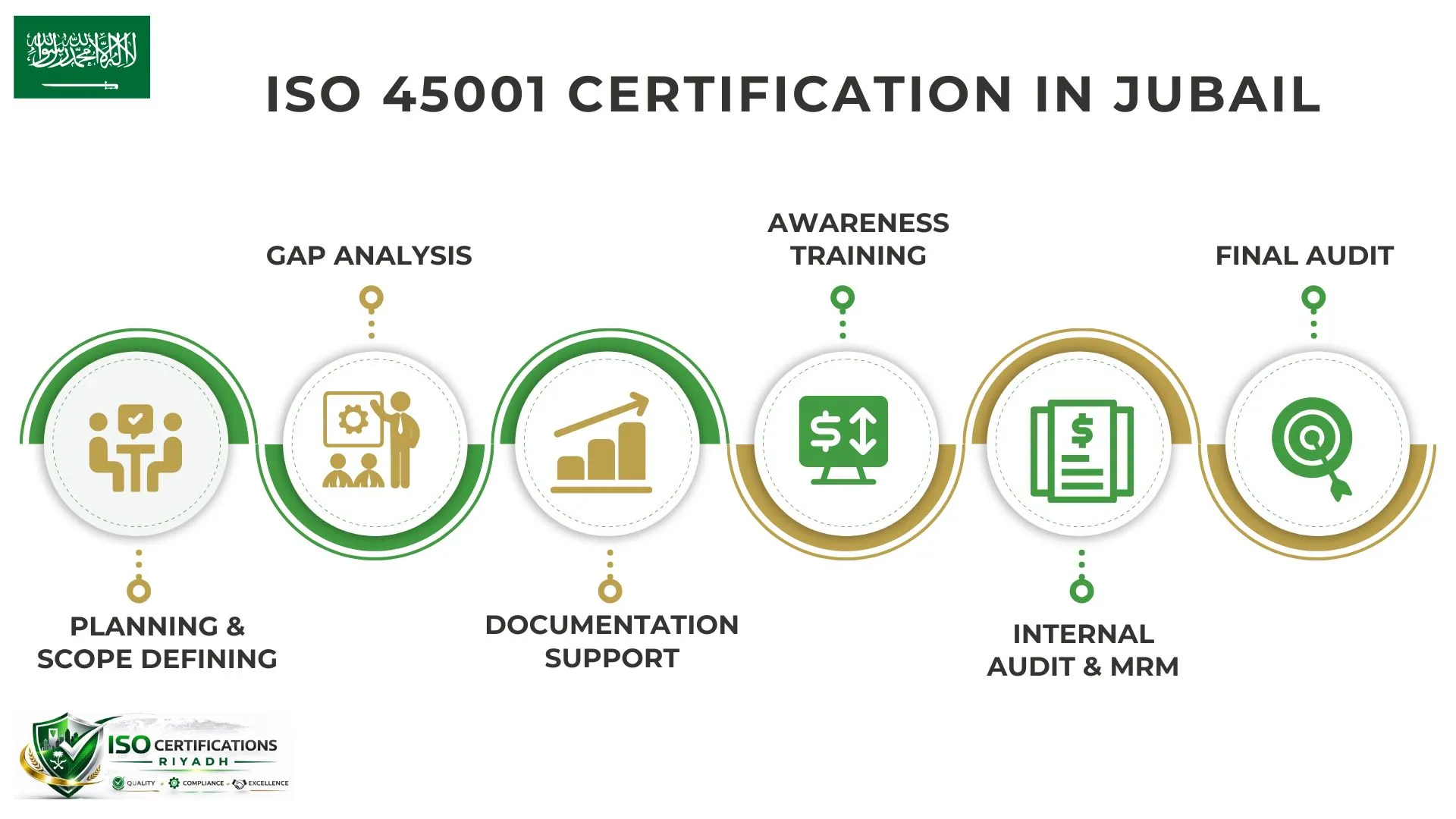
How To Get ISO 45001 Certification In Jubail - 6 Simple Steps
Why Businesses in Jubail Pursue ISO 45001 Certification
- Improving Contractor Safety Management: Contractors play a significant role within Jubail’s industrial ecosystem. Many organizations simultaneously manage multiple contractors performing engineering, construction, maintenance, fabrication, inspection, logistics, and technical support activities. Maintaining consistent safety expectations across diverse contractor workforces can be challenging.
- Reducing Workplace Incidents: Organizations implementing ISO 45001 establish processes for hazard identification, risk assessment, incident reporting, investigation, corrective actions, and continual improvement.These activities help reduce the likelihood of workplace incidents while improving overall safety performance.
- Supporting Customer and Project Requirements: Many industrial customers, project owners, and multinational organizations evaluate occupational health and safety performance during supplier qualification and contractor selection activities.ISO 45001 certification helps demonstrate commitment to workforce safety and responsible operational management.
- Strengthening Workforce Confidence: Employees are more likely to perform effectively when they feel protected, supported, and actively involved in safety-related activities.
Industries We Support for ISO 45001 Certification in Jubail
Different industrial sectors face different workplace safety risks, operational hazards, and contractor management challenges. Because of this, ISO 45001 implementation should always align with the organization’s operational environment and industrial exposure.
- Oil & Gas Support Companies: Oil & gas support businesses often implement ISO 45001 certification to improve workplace safety visibility, strengthen contractor safety accountability, improve operational hazard monitoring, and support refinery qualification requirements across project environments.
- EPC Contractors & Engineering Companies: Engineering firms and EPC contractors increasingly pursue ISO 45001 certification to strengthen operational safety discipline, improve project risk visibility, support industrial tender qualification, and improve contractor safety accountability across project activities.
- Industrial Manufacturing Companies: Industrial manufacturers implement ISO 45001 to improve workplace safety controls, strengthen hazard monitoring practices, improve workforce awareness visibility, and reduce recurring workplace incidents across manufacturing environments.
- Construction & Infrastructure Companies: Construction companies implement ISO 45001 certification to improve operational safety monitoring, strengthen contractor coordination, improve hazard control visibility, and support long-term project safety management.
- Industrial Logistics & Warehousing Operations: Industrial logistics providers and warehousing operations implement ISO 45001 to improve material handling safety, strengthen operational hazard monitoring, improve workforce safety awareness, and reduce operational incident exposure across logistics environments.
Our ISO 45001 Implementation Methodology
At ISO Certifications Riyadh, our implementation approach focuses on building practical Occupational Health & Safety Management Systems aligned with real industrial activities rather than creating excessive safety documentation that operational teams rarely use.
We help organizations establish systems that improve workplace safety accountability, strengthen operational risk visibility, improve workforce awareness, and support long-term industrial reliability.
- Workplace Safety Gap Analysis & Operational Risk Assessment
Every ISO 45001 implementation begins with understanding how the organization currently manages workplace safety responsibilities, operational hazards, contractor safety controls, and industrial risk exposure.
During this stage, we evaluate:
- workplace hazards
- operational risk exposure
- contractor safety practices
- incident reporting visibility
- hazardous operational activities
- workforce safety awareness
- compliance obligations
- operational safety controls
The objective is to identify workplace safety gaps and establish a realistic implementation roadmap aligned with the organization’s industrial environment and operational risks.
This stage helps businesses improve visibility into operational safety weaknesses before implementation activities begin.
- Safety Documentation & Operational Control Development
Once implementation gaps are identified, we help organizations establish practical Occupational Health & Safety Management System documentation and operational controls aligned with actual industrial activities.
This typically includes:
- OH&S policies
- SOPs
- hazard control procedures
- incident reporting mechanisms
- operational safety monitoring controls
- emergency preparedness practices
- corrective action procedures
- compliance records
Our focus is not creating unnecessary paperwork. Instead, we establish systems that industrial teams can realistically follow and management can effectively monitor across day-to-day operations.
- Workplace Safety System Implementation & Employee Awareness
Documentation alone does not improve workplace safety unless the system becomes integrated into actual operational workflows.
During implementation, we work closely with departments to integrate safety controls, operational hazard monitoring activities, reporting structures, and accountability mechanisms into industrial environments.
Awareness sessions help employees understand:
- workplace safety responsibilities
- hazard reporting practices
- operational risk exposure
- emergency response expectations
- incident prevention controls
- operational safety accountability
This stage is critical because many workplace incidents occur due to inconsistent operational execution rather than lack of documentation alone.
A successful ISO 45001 implementation ensures workplace safety becomes part of operational culture rather than an isolated compliance activity.
- Internal Audit & Safety Management Review
Internal audits are conducted to evaluate implementation effectiveness, identify workplace safety gaps, assess operational safety controls, and review whether safety practices are functioning effectively across operational activities.
Management review activities help leadership evaluate:
- workplace safety performance
- operational hazards
- incident trends
- corrective actions
- workforce safety visibility
- improvement opportunities
This stage improves operational safety visibility while strengthening accountability and industrial audit preparedness across the organization.
Rather than treating internal audits as a checklist exercise, we focus on helping businesses use audits as operational workplace safety improvement tools.
- Certification Audit & Continual Workplace Safety Improvement Support
Once the organization is operationally prepared, the ISO 45001 certification audit process is coordinated with the certification body.
During this stage, we support organizations with:
- certification audit preparation
- safety audit coordination
- corrective action guidance
- nonconformity closure support
- continual workplace safety improvement planning
However, certification should never be viewed as the final objective.
Organizations that gain the most value from ISO 45001 are usually those that continue improving workplace safety controls, contractor monitoring practices, hazard visibility, and workforce awareness activities after certification is completed.
Benefits of ISO 45001 Certification for Businesses in Jubail
- Improved Workplace Safety: Helps organizations identify hazards, reduce risks, and create a safer working environment for employees and contractors.
- Reduced Workplace Accidents and Injuries: Strengthens preventive measures to minimize incidents, injuries, illnesses, and operational disruptions.
- Enhanced Legal and Regulatory Compliance: Supports compliance with occupational health and safety laws, regulations, and industry requirements.
- Stronger Risk Management: Enables proactive identification, assessment, and control of workplace health and safety risks.
- Increased Employee Confidence and Well-Being: Promotes a positive safety culture that improves employee morale, engagement, and productivity.
- Improved Operational Efficiency: Reduces downtime, incident-related costs, and disruptions caused by workplace accidents.
- Enhanced Corporate Reputation: Demonstrates a commitment to employee safety and responsible business practices, strengthening stakeholder trust.
ISO 45001 Certification Cost in Jubail, Saudi Arabia
One of the most common questions organizations ask is:
“What is the cost of ISO 45001 certification in Jubail?”
The answer depends on several organizational and operational factors rather than a fixed certification fee.
Key factors influencing implementation and certification costs include:
- Organization size
- Number of employees
- Number of operational locations
- Industry complexity
- Existing safety management practices
- Workforce structure
- Contractor involvement
- Operational risk profile
- Scope of certification
- Certification body fees
Organizations operating in petrochemical environments, manufacturing facilities, engineering projects, construction activities, and industrial service sectors often require broader implementation efforts due to the complexity of workplace hazards and operational risks.
Why Businesses Choose ISO Certifications Riyadh.com for ISO 45001 Certification
Organizations choose ISO Certifications Riyadh because we understand the occupational health and safety challenges faced by industrial businesses operating in Jubail.
We recognize that workplace safety requirements vary significantly between petrochemical facilities, manufacturing operations, engineering contractors, fabrication workshops, maintenance organizations, logistics providers, and energy-sector suppliers.
Our objective is not simply to help organizations obtain certification. We help build Occupational Health & Safety Management Systems that improve workforce protection, strengthen risk management, support operational reliability, and create measurable business value.
Our services include:
- Gap Analysis
- Hazard Assessment Support
- Documentation Development
- Employee Awareness Training
- Internal Audits
- Management Review Support
- Certification Preparation
- Continual Improvement Guidance
We focus on helping organizations create safer workplaces while supporting long-term business performance.
Start Your ISO Certification in Riyadh Today
Get expert guidance, fast approval, and internationally recognized ISO certification for your business in Saudi Arabia.
FAQs
What is ISO 45001 certification?
ISO 45001 is an internationally recognized Occupational Health & Safety Management System standard that helps organizations provide safe and healthy workplaces while preventing work-related injuries and illnesses.
Why is ISO 45001 important for businesses in Jubail?
Jubail is home to manufacturing facilities, petrochemical operations, engineering contractors, fabrication companies, industrial maintenance providers, and logistics organizations that often manage high-risk activities.
Which industries commonly implement ISO 45001 in Jubail?
Industries commonly implementing ISO 45001 include:
- Petrochemical companies
- Manufacturing facilities
- EPC contractors
- Construction companies
- Fabrication organizations
- Industrial maintenance providers
- Logistics businesses
- Warehousing operations
- Energy-sector suppliers
- Engineering organizations
How much does ISO 45001 certification cost in Jubail?
The cost depends on factors such as organization size, workforce numbers, operational complexity, number of locations, risk profile, implementation requirements, and certification body fees.