Author name: Muhammad Faisal

Information Security Management System certification Riyadh
ISO 27001

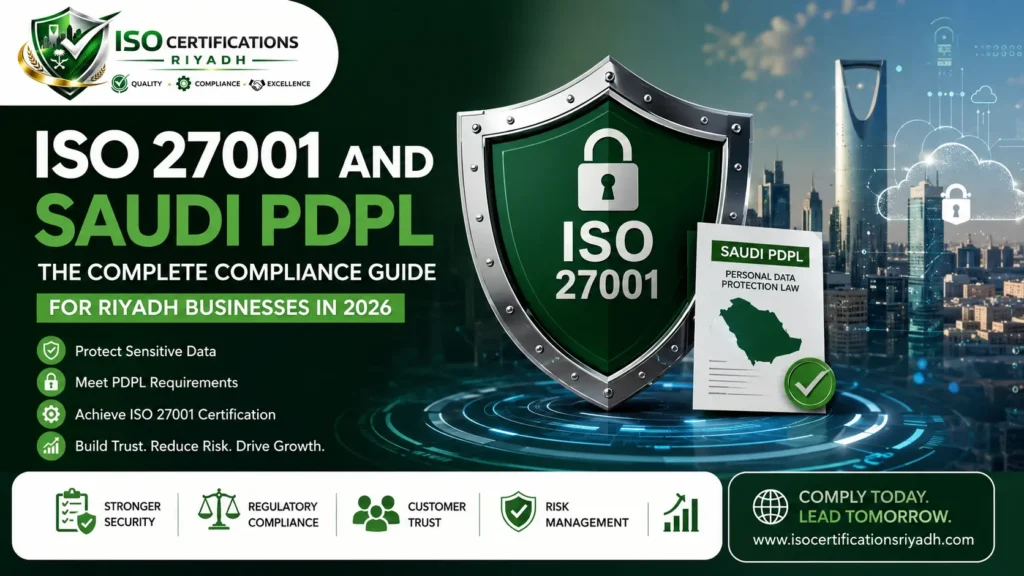
ISO 27001 and Saudi PDPL: The Complete Compliance Guide for Riyadh Businesses in 2026

ISO 27001 and Saudi PDPL: The Complete Compliance Guide for Riyadh Businesses in 2026 Data has become the foundation of modern business operations. Whether an organization is processing customer information, employee records, financial transactions, healthcare data, or supplier information, protecting that data is now a business-critical responsibility. In Saudi Arabia, this responsibility has become even more significant as the Kingdom accelerates its digital transformation agenda under Vision 2030. Riyadh, as the country’s economic and technology hub, is witnessing rapid growth in fintech, healthcare, e-commerce, government digital services, cloud adoption, artificial intelligence, and smart city initiatives. While these developments create enormous opportunities, they also introduce new cybersecurity and privacy risks. To address these challenges, Saudi Arabia has strengthened its regulatory framework through the Personal Data Protection Law (PDPL), while organizations increasingly adopt internationally recognized standards such as ISO 27001 to improve information security governance. Many Riyadh businesses ask the same question: Is PDPL compliance enough, or should we also pursue ISO 27001 certification? The answer is that these frameworks serve different but complementary purposes. PDPL establishes the legal obligations organizations must follow when processing personal data. ISO 27001 provides a structured management framework for implementing security controls, managing risks, and continuously improving information security practices. Together, they create a powerful compliance and security strategy that helps organizations reduce cyber risks, strengthen customer trust, demonstrate accountability, and support long-term business growth. This guide explains how Riyadh businesses can align ISO 27001 with Saudi PDPL requirements in 2026 and build a sustainable compliance framework that supports both regulatory obligations and business objectives. What Is ISO 27001 and Saudi PDPL? ISO 27001 is the international standard for establishing, implementing, maintaining, and continually improving an Information Security Management System (ISMS). Saudi PDPL is the Kingdom’s primary privacy law governing how organizations collect, process, store, and protect personal data. Together, they help businesses strengthen cybersecurity, protect privacy, and meet regulatory expectations. Why Is ISO 27001 and PDPL Compliance Important? Organizations today face increasing pressure from regulators, customers, investors, and business partners to protect sensitive information. A single data breach can result in: Financial losses Legal consequences Business disruption Loss of customer trust Reputational damage For Riyadh businesses operating in highly regulated sectors such as healthcare, banking, fintech, telecommunications, and government services, compliance is no longer a competitive advantage—it is becoming a business necessity. ISO 27001 and PDPL together provide a framework for managing these risks while demonstrating commitment to information security and privacy protection Understanding Saudi PDPL in 2026 What Is Saudi PDPL? The Personal Data Protection Law (PDPL) is Saudi Arabia’s comprehensive privacy legislation designed to protect individuals’ personal information and regulate how organizations process data. The law applies to organizations operating within Saudi Arabia and, in certain situations, organizations outside the Kingdom that process personal data related to individuals residing in Saudi Arabia. The primary objective of PDPL is to ensure personal data is handled lawfully, fairly, securely, and transparently. PDPL Compliance Pillars 5 Core PDPL Compliance Requirements Organizations handling personal information should establish strong privacy practices to ensure compliance, reduce risk exposure, and build stakeholder trust. 01 Lawful Collection Define collection purpose Explain data usage Identify data access Set retention periods 02 Transparency Privacy notices Processing purposes Retention details Contact information 03 Data Subject Rights Access requests Correction requests Data updates Processing information 04 Data Security Access controls Encryption Monitoring systems Backup procedures 05 Retention & Disposal Retention policies Compliance support Risk reduction Secure disposal PDPL Compliance Benefits Implementing these five PDPL principles helps organizations strengthen privacy governance, protect personal information, improve regulatory compliance, reduce security risks, and increase customer confidence through responsible data management practices. Understanding ISO 27001:2022 What Is ISO 27001? ISO 27001 is the globally recognized standard for information security management. Rather than focusing on individual technologies, ISO 27001 establishes a management system that enables organizations to identify risks, implement controls, monitor effectiveness, and continually improve security performance. The standard applies to organizations of all sizes and industries. Core Components of ISO 27001 Core Components of ISO 27001 01 Context of the Organization Organizations must understand their business environment, stakeholder expectations, and regulatory obligations before implementing an Information Security Management System (ISMS). Internal Issues: Business processes, culture, resources, and capabilities. External Issues: Market conditions, threats, regulations, and industry trends. Interested Parties: Customers, regulators, suppliers, employees, and investors. Compliance Obligations: Legal, contractual, and regulatory requirements. 02 Leadership Commitment Top management plays a critical role in establishing a strong security culture. Leadership must provide direction, resources, accountability, and ongoing support for information security initiatives. 03 Risk Assessment Risk assessment forms the foundation of ISO 27001 by helping organizations identify, analyze, and prioritize information security risks. Threats: Cyberattacks, insider risks, and operational disruptions. Vulnerabilities: Weak controls, outdated systems, or human error. Potential Impacts: Financial, legal, operational, and reputational damage. Likelihood: Probability of a threat exploiting a vulnerability. 04 Risk Treatment After identifying risks, organizations implement appropriate security controls to reduce risk exposure to acceptable levels while supporting business objectives and compliance requirements. 05 Continuous Improvement ISO 27001 follows a continual improvement approach through monitoring, audits, management reviews, and corrective actions to ensure controls remain effective against evolving cyber threats and business changes. How ISO 27001 Supports PDPL Compliance One of the biggest misconceptions among Riyadh businesses is that privacy and cybersecurity are separate disciplines. In reality, effective privacy protection depends heavily on strong information security controls. How ISO 27001 Supports Saudi PDPL Compliance While Saudi PDPL establishes legal requirements for protecting personal data, ISO 27001 provides the security framework and controls needed to implement those requirements effectively. Saudi PDPL Requirement ISO 27001 Support Mechanism Data Security Security Controls Framework Access Management Access Control Policies Incident Response Security Incident Procedures Risk Management Formal Risk Assessments Vendor Security Supplier Security Controls Data Protection Encryption & Monitoring Governance ISMS Structure Accountability Documentation & Audits Expert Insight: Organizations in Riyadh pursuing Saudi PDPL compliance often find that implementing ISO 27001 significantly reduces compliance complexity. The standard provides a structured Information Security Management System (ISMS) that supports
ISO 9001:2015 to ISO 9001:2026 transition roadmap for organizations in Riyadh
ISO 9001:2026

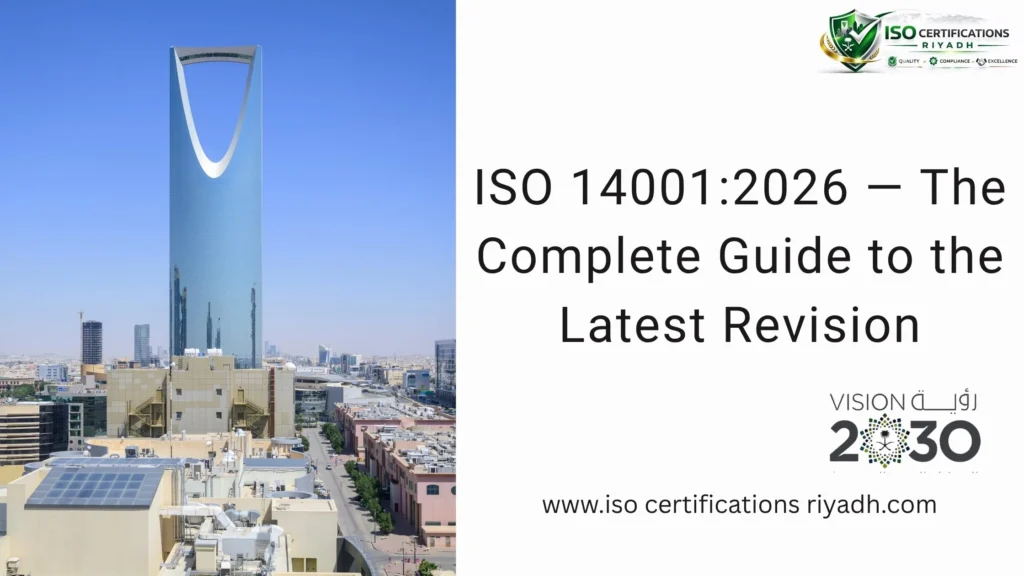
ISO 9001:2026 Quality Management System – The Complete Guide for Riyadh Businesses

ISO 9001:2026 Quality Management System – The Complete Guide for Riyadh Businesses How to Transition from ISO 9001:2015 to ISO 9001:2026 in Saudi Arabia The world’s most widely adopted quality management standard is changing. With the publication of ISO 9001:2026 expected in September 2026, businesses across Riyadh and Saudi Arabia are preparing for the next evolution of quality management systems. Whether you are a manufacturing company in Riyadh Industrial City, a construction contractor supporting Vision 2030 projects, a healthcare provider, logistics company, technology firm, or service organization, understanding the upcoming changes is essential to maintaining certification and staying competitive. The good news is that ISO 9001:2026 is not a complete overhaul of the standard. Organizations already certified to ISO 9001:2015 will not need to rebuild their Quality Management System (QMS) from scratch. However, new expectations around leadership, quality culture, digital transformation, climate considerations, ethics, and organizational resilience will require careful planning. This guide explains the expected changes, transition requirements, and practical steps Riyadh businesses should take now. Why Is ISO 9001 Being Revised? The business landscape has changed significantly since ISO 9001:2015 was published. Organizations today face: Digital transformation and automation Artificial intelligence and data-driven operations Global supply chain disruptions Increased customer expectations Sustainability and climate-related concerns Greater focus on ethics and governance Business continuity and resilience challenges To remain relevant, ISO has updated the standard to address modern business realities while maintaining the core principles that made ISO 9001 successful. What Is ISO 9001:2026? ISO 9001:2026 is the latest revision of the international standard for Quality Management Systems (QMS). The standard continues to provide a framework for organizations to: Improve customer satisfaction Enhance operational efficiency Reduce risks Improve process performance Drive continual improvement Strengthen organizational effectiveness The revised version introduces new expectations while preserving the familiar structure used in ISO 9001:2015. The Five New Requirements in ISO 9001:2026 ISO 9001 Changes 01 Quality Culture & Ethics Top management must actively promote quality culture and ethical behaviour. 02 Risks & Opportunities Risks and opportunities must be identified and managed separately. 03 Climate Change Climate-related issues must be considered within the QMS. 04 Change Management Stronger controls for planning and evaluating organizational changes. 05 Leadership Accountability Leadership must show greater involvement in quality improvement. What Will Not Change? Many organizations worry that a new standard means a complete redesign of their management system. Fortunately, the fundamentals remain unchanged. Organizations will continue using: Process approach PDCA (Plan-Do-Check-Act) Customer focus Risk-based thinking Internal audits Management reviews Corrective actions Continual improvement For most certified organizations, the transition will involve enhancements rather than complete restructuring. How to Transition from ISO 9001:2015 to ISO 9001:2026 Step 1: Conduct a Gap Analysis Begin by comparing your existing ISO 9001:2015 system against the new requirements. Evaluate: Leadership practices Risk management processes Quality culture initiatives Supplier management controls Digital systems oversight Climate-related considerations A detailed gap analysis forms the foundation of a successful transition plan. Step 2: Update Organizational Context Review and update: SWOT Analysis PESTLE Analysis Interested Parties Register Strategic Risk Register Include: Digital transformation risks Climate considerations Supply chain challenges Regulatory developments Market expectations Step 3: Strengthen Leadership Involvement Top management should actively demonstrate commitment through: Quality objectives Leadership reviews Employee engagement programs Quality awareness initiatives Strategic improvement projects Auditors will increasingly look for evidence rather than policy statements alone. Step 4: Improve Risk and Opportunity Management Create a more structured approach to identifying and managing: Strategic risks Operational risks Supplier risks Technology risks Business opportunities Document actions, responsibilities, and performance monitoring methods. Step 5: Review Digital Systems Organizations should evaluate: ERP systems Quality management software Electronic records Automated workflows AI-assisted processes Ensure controls are in place to maintain data accuracy, integrity, and accessibility. Step 6: Update Supplier Management Processes Strengthen controls around: Supplier evaluations Performance monitoring Critical supplier risk assessments Contingency planning This is especially important for organizations supporting major projects across Riyadh and the Kingdom. Step 7: Train Employees and Internal Auditors Provide awareness training covering: New ISO 9001:2026 requirements Quality culture expectations Risk management updates Digital process controls Leadership responsibilities Internal auditors should receive specialized transition training. Step 8: Perform Internal Transition Audits Before your certification body audit: Conduct a full internal audit Identify nonconformities Implement corrective actions Verify effectiveness Conduct management review This ensures your organization is fully prepared for transition assessment. When Should Riyadh Businesses Start Preparing? The best time is now. Organizations that begin early will: Avoid rushed implementation Reduce audit risks Minimize certification disruption Improve employee awareness Strengthen operational performance Early preparation also allows organizations to spread implementation costs and resources over a longer period. How ISO 9001:2026 Supports Saudi Vision 2030 The revised standard aligns strongly with Saudi Arabia’s focus on: Operational excellence Digital transformation Innovation Governance Sustainability Global competitiveness Organizations that successfully transition to ISO 9001:2026 will be better positioned to meet customer expectations, regulatory requirements, and market demands across the Kingdom. Final Thoughts ISO 9001:2026 represents the next generation of quality management. While the core framework remains familiar, organizations will need to place greater emphasis on quality culture, leadership engagement, digital transformation, organizational resilience, and proactive risk management. For businesses in Riyadh and throughout Saudi Arabia, transitioning early provides a significant competitive advantage. Companies that begin planning today will experience a smoother migration process, stronger operational performance, and greater readiness for future business challenges. If your organization is currently certified to ISO 9001:2015, now is the ideal time to start assessing your readiness and building a structured transition roadmap toward ISO 9001:2026. Start Your ISO 9001:2026 Certification in Riyadh Today Get expert guidance, fast approval, and internationally recognized ISO certification for your business in Saudi Arabia. Get Free Consultation FAQs What are the major changes in ISO 9001:2026 compared to ISO 9001:2015? ISO 9001:2026 is expected to introduce stronger requirements related to quality culture, ethical leadership, digital transformation, data integrity, climate change considerations, organizational resilience, and enhanced risk and opportunity management. While the core structure of the standard remains unchanged, organizations will need to demonstrate a

ISO-14001-2026
ISO 14001 Riyadh

ISO 14001:2026 — The Complete Guide to the Latest Revision (New Requirements, Key Changes & What Saudi Businesses Must Do Now)

ISO 14001:2026 — The Complete Guide to the Latest Revision (New Requirements, Key Changes & What Saudi Businesses Must Do Now) If your business is already certified under ISO 14001:2015, you have probably heard that a new version is coming. ISO 14001:2026 is here, and it brings some important updates that every business in Saudi Arabia needs to understand. The good news? This is not a full overhaul. It is a focused revision designed to make the standard clearer, more practical, and more aligned with today’s environmental challenges like climate change, biodiversity loss, and ecosystem health. In this blog, we will break down in simple language everything that changed, why it matters, and what your company needs to do next. What Is ISO 14001 and Why Does It Matter? ISO 14001 is the international standard for Environmental Management Systems (EMS). It gives businesses a structured framework to manage their environmental impact, such as energy use, waste, water consumption, and pollution. Getting certified under ISO 14001 shows your clients, partners, and the government that your business takes environmental responsibility seriously. For businesses in Riyadh and across Saudi Arabia, this is becoming more important every year. With Vision 2030 pushing sustainability as a national priority, ISO 14001 certification puts your company ahead of the curve. Why Was ISO 14001 Updated in 2026? The previous version, ISO 14001:2015, was a strong standard, but the world has changed. Climate change is no longer a future concern; it is happening right now. Biodiversity is under pressure. Ecosystem health is a real business risk. The 2026 revision addresses these realities. The goal was a limited revision with maximum impact: improve what needed improving, clarify what was confusing, and add only what was truly necessary. There are three main directives behind this update: Holistic Approach: Keep the environmental focus strong but expand it to cover today’s urgencies like climate, biodiversity, and natural resources. Support for Users: Make the requirements clearer and easier to implement correctly. Harmonised Structure: Align with the latest ISO Harmonised Structure so it fits better alongside ISO 9001, ISO 45001, and other standards. The Five New Requirements in ISO 14001:2026 01 Change Management New clause 6.3 Requires a formal process for managing all organisational changes — not just operational ones — and assessing their environmental impact. What to do: Document a clear change management process covering restructuring, expansion, or direction changes. 02 Externally Provided PDP Clause 8.1, 3rd paragraph Extends controls beyond outsourced processes to all externally provided products, services, and processes relevant to EMS results. Term “outsource” removed. What to do: Map all suppliers and third-party services that affect your environmental performance. 03 Audit Objectives Formally Determined Clause 9.2.2, 3rd paragraph Audit objectives must now be formally determined and documented for every internal audit — no longer implied or informal. What to do: Add a clear, written statement of objectives to every internal audit plan. 04 Audit Programme Must Be Documented Clause 9.2.2, 4th paragraph Your audit programme must exist as documented information — an informal calendar or mental plan is no longer sufficient. What to do: Create and maintain a formal, documented audit programme available for review. 05 All Management Review Inputs Now Mandatory Clause 9.3 (a–g) All inputs listed (a) through (g) for management review were previously guidance. In ISO 14001:2026 they are all compulsory — every single one must be formally addressed. What to do: Update your management review agenda and records to cover all 7 mandatory inputs with documented evidence. Key Clarifications You Should Know About Beyond the new requirements, ISO 14001:2026 also brings important clarifications to existing requirements. These are not entirely new rules  but they clear up confusion and raise the bar for implementation quality. Holistic Environmental Focus: The standard now explicitly asks you to consider a wider range of environmental conditions when analysing your context. This includes: Natural resources availability Climate change impacts Biodiversity loss Ecosystem health Pollution levels These topics now appear in Clause 4.2 (understanding interested parties), Clause 5.2 (environmental policy), and the guidance in Annex A.4. If your current context analysis only looks at direct environmental aspects like emissions and waste, it is time to think more broadly. Risks and Opportunities — Broader Context Required: Clause 6.1 has been restructured (now 6.1.1 to 6.1.5) to provide better logical flow. More importantly, the determination of risks and opportunities must now involve a broader context, not just your environmental aspects, but the full range of factors that could affect whether your EMS achieves its intended outcomes. Life Cycle Perspective — Now Clarified: Clause 6.1.2 on environmental aspects now includes a specific note explaining what “life cycle perspective” actually means. This has been a source of confusion for many companies, and the clarification should make implementation much more practical. Improvement Clauses Merged: Clauses 10.1 (Improvement) and 10.2 (Continual Improvement) from the 2015 version have been merged into a single, cleaner clause. This simplifies things and aligns better with the ISO Harmonised Structure. What the Updated Annex A Covers Annex A is informative guidance  it does not add requirements, but it helps you implement the standard correctly. ISO 14001:2026 significantly expanded Annex A to cover: What “outcome” and “intended outcome” actually mean (A3) What externally provided processes, products, or services involve (A3) How interconnected environmental conditions should be considered (A4) Why interested parties’ relevant topics go beyond single issues like climate change (A4) Key components of ecosystems and what ecosystem health involves (A6) How to determine environmental aspects using a life cycle perspective (A6) Broader context examples for risks and opportunities (A6) How to assess whether your EMS can achieve its intended outcomes (A6) This expanded guidance is genuinely useful. We recommend reading Annex A carefully alongside the main clauses. How Does ISO 14001:2026 Align with Other Standards? One of the goals of this revision was to align ISO 14001 more closely with the ISO Harmonised Structure, the common framework used by ISO 9001 (Quality), ISO 45001 (Safety), and ISO 27001 (Information Security). Some specific alignment

Your information is safe with us  we’ll only reach out to assist you.

    Scroll to Top