
ISO 14001:2026 Certification in Yanbu, Saudi Arabia
Environmental Management System Consulting Services for Refining, Petrochemical, Manufacturing, Logistics and Industrial Organizations
ISO 14001:2026 Certification in Yanbu helps organizations establish an effective Environmental Management System (EMS) that improves environmental performance, supports regulatory compliance, and promotes sustainable business practices. As a major industrial and port city in Saudi Arabia, Yanbu is home to industries such as petrochemicals, oil and gas, manufacturing, logistics, construction, and energy, where environmental responsibility plays a critical role. ISO 14001 provides a structured framework for identifying environmental aspects, reducing waste, preventing pollution, conserving resources, and managing environmental risks. The certification process includes environmental assessments, system development, documentation, employee training, internal audits, and certification audits conducted by accredited certification bodies. Achieving ISO 14001 certification helps organizations enhance environmental performance, improve resource efficiency, strengthen stakeholder confidence, and demonstrate commitment to sustainability. For businesses operating in Yanbu, ISO 14001:2026 Certification supports long-term environmental responsibility, operational excellence, regulatory compliance, and sustainable growth while helping organizations meet evolving environmental expectations and market demands.
What is ISO 14001:2026?
ISO 14001:2026 is an internationally recognized standard for Environmental Management Systems (EMS). It provides organizations with a structured framework to identify, manage, monitor, and reduce the environmental impact of their activities, products, and services. The standard focuses on improving environmental performance, preventing pollution, conserving resources, ensuring regulatory compliance, and promoting continual improvement. ISO 14001 is suitable for organizations of all sizes and industries, including manufacturing, construction, energy, logistics, healthcare, and professional services. Achieving ISO 14001 certification demonstrates a commitment to environmental responsibility, sustainability, and effective environmental management while enhancing organizational credibility, operational efficiency, stakeholder confidence, and long-term business success.
Why Environmental Management Matters in Yanbu
Balancing Industrial Growth with Environmental Responsibility
Few cities in Saudi Arabia have the same combination of industrial activity, refining operations, petrochemical production, export logistics, and coastal infrastructure as Yanbu.
This creates unique environmental challenges.
Organizations must manage environmental considerations associated with:
- Industrial operations
- Refinery activities
- Chemical storage
- Transportation networks
- Port operations
- Marine ecosystems
- Waste generation
- Resource consumption
- Construction projects
- Utility usage
Environmental incidents can affect more than compliance obligations.
They may impact:
- Business reputation
- Customer confidence
- Community relationships
- Operational continuity
- Investor perception
- Project approvals
- Market competitiveness
As environmental expectations continue to evolve globally, organizations are increasingly expected to demonstrate measurable environmental performance improvements. ISO 14001 provides a structured framework for achieving these objectives.
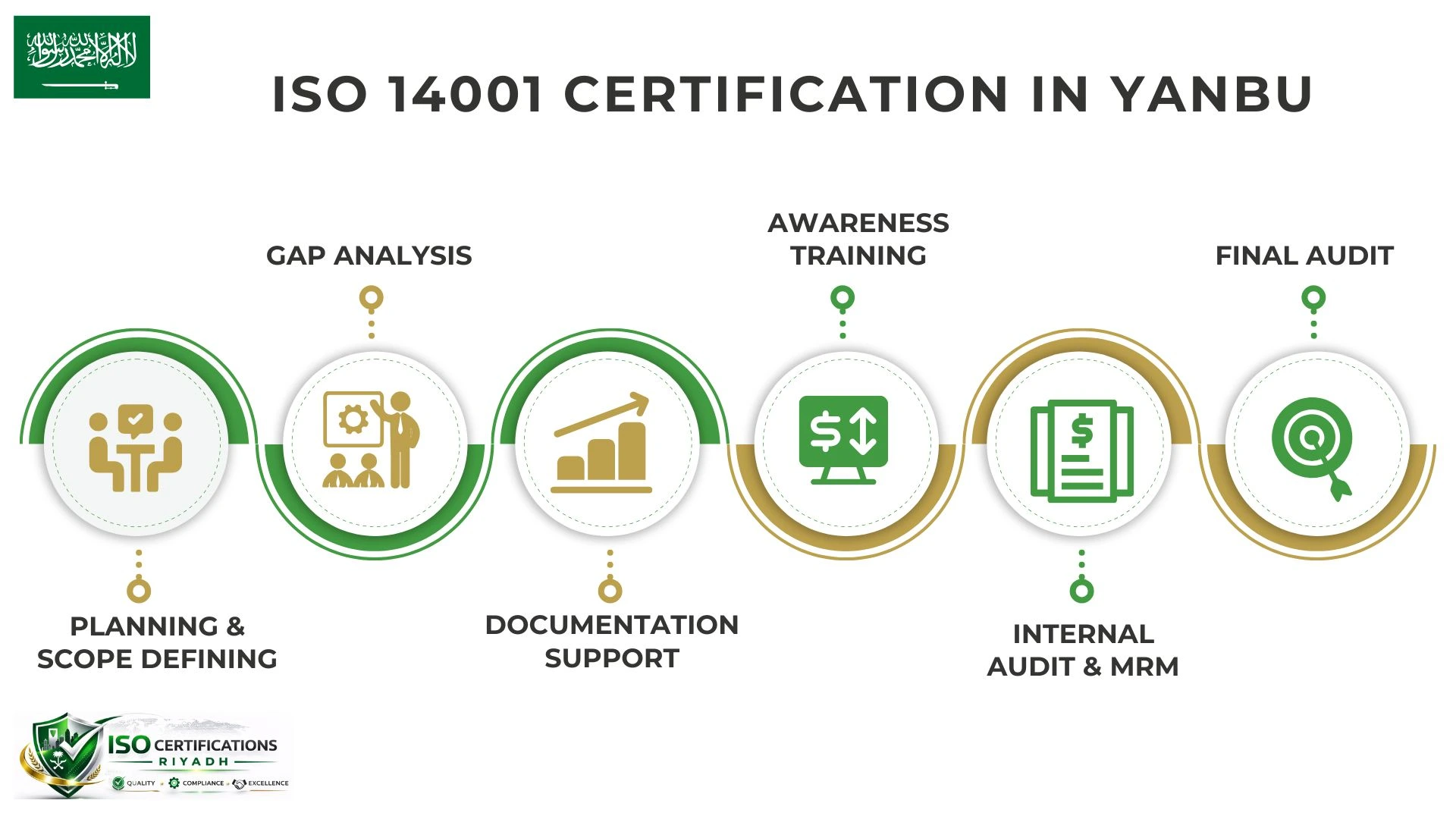
How To Get ISO 14001 Certification in Yanbu - 6 Simple Steps
Why Organizations in Yanbu Pursue ISO 14001 Certification
- Supporting Sustainable Industrial Development: Yanbu’s industrial ecosystem continues to expand through refining, manufacturing, petrochemical operations, infrastructure development, and logistics investments. Organizations increasingly recognize that long-term growth must be supported by responsible environmental practices. ISO 14001 helps establish systems capable of supporting sustainable development objectives.
- Strengthening Environmental Compliance: Environmental regulations continue to evolve across industries. Organizations must understand and manage legal, regulatory, contractual, and stakeholder requirements effectively. ISO 14001 helps create structured processes for identifying, evaluating, and managing compliance obligations.
- Meeting Customer and Stakeholder Expectations: Many customers, investors, multinational organizations, and government entities evaluate environmental performance when selecting suppliers and partners. ISO 14001 certification demonstrates commitment to environmental responsibility and continual improvement.
Why ISO 14001 is Highly Relevant in Yanbu
Environmental management in Yanbu differs from environmental management in cities driven primarily by services or administration.
Organizations frequently operate within environments where environmental considerations are directly connected to:
- Refining activities
- Petrochemical production
- Industrial emissions
- Marine logistics
- Export operations
- Hazardous material handling
- Large-scale utility consumption
- Industrial infrastructure
As a result, environmental performance often becomes a strategic business issue rather than a standalone compliance activity.
Organizations capable of demonstrating responsible environmental management frequently strengthen:
- Customer confidence
- Regulatory relationships
- Investor trust
- Community reputation
- Long-term competitiveness
This makes ISO 14001 particularly valuable within Yanbu’s business ecosystem.
Our ISO 14001:2026 Implementation Methodology
- Environmental Assessment and Gap Analysis: Implementation begins with a detailed evaluation of organizational activities, environmental aspects, compliance obligations, operational processes, stakeholder expectations, and existing environmental controls. For organizations in Yanbu, this frequently includes reviewing industrial activities, utility consumption, waste management practices, emissions, logistics operations, and environmental risks. The objective is to identify gaps and establish a practical implementation roadmap aligned with organizational objectives.
- Environmental Aspect Evaluation and Risk Assessment: Organizations identify environmental aspects associated with their activities, products, and services. Environmental impacts, risks, opportunities, compliance obligations, and stakeholder concerns are evaluated. Environmental objectives and performance priorities are established to support continual improvement.
- Environmental Management System Development: Environmental policies, procedures, operational controls, emergency preparedness arrangements, monitoring mechanisms, compliance processes, and supporting documentation are developed. The focus remains on building a management system that supports operational realities and environmental performance improvement.
- Implementation, Awareness and Operational Integration: Environmental controls are integrated into daily business activities. Employees, contractors, supervisors, and managers receive awareness training regarding environmental responsibilities, operational controls, emergency procedures, and environmental objectives. This helps environmental management become part of organizational culture rather than a separate compliance exercise.
- Environmental Performance Evaluation, Internal Audit and Management Review: Once the Environmental Management System has been implemented, organizations must evaluate whether environmental objectives, operational controls, compliance activities, and sustainability initiatives are delivering the intended outcomes. Environmental management cannot be effective without measurement and evaluation. Organizations need visibility into: • Environmental performance trends • Compliance status • Resource consumption • Waste generation • Environmental incidents • Improvement initiatives • Achievement of objectives • Emerging environmental risks Internal audits are conducted to verify conformity with ISO 14001:2026 requirements and assess the effectiveness of the Environmental Management System.
- Certification Audit and Continual Environmental Improvement: Following implementation, certification audits are conducted by an accredited certification body. The certification process evaluates whether the Environmental Management System conforms to ISO 14001:2026 requirements and whether environmental controls are effectively integrated into organizational operations. Following certification, organizations continue improving environmental performance through: • Environmental monitoring • Internal audits • Compliance evaluations • Corrective actions • Sustainability programs • Resource efficiency initiatives • Leadership reviews • Continual improvement projects Organizations that achieve the greatest value from ISO 14001 view certification as the beginning of their environmental improvement journey rather than the final destination.
Benefits of ISO 14001:2026 Certification for Organizations in Yanbu
- Improved Environmental Performance: ISO 14001 helps organizations identify environmental impacts and establish controls that improve overall environmental performance. This creates measurable improvements in how resources are managed and how environmental risks are controlled.
- Enhanced Environmental Compliance: Environmental regulations continue to evolve across industrial sectors.ISO 14001 helps organizations establish systematic approaches for identifying, monitoring, and managing compliance obligations. This improves regulatory readiness and reduces compliance-related risks.
- Better Protection of Coastal and Marine Environments: Yanbu’s location along the Red Sea creates unique environmental responsibilities. Organizations involved in port operations, logistics, refining, petrochemicals, and industrial activities often place significant emphasis on protecting coastal ecosystems and marine resources.
- ISO 14001 supports these efforts through proactive environmental management.
- Improved Waste Management:
- Waste generation is a common challenge across industrial and commercial operations.
- ISO 14001 helps organizations improve:
- • Waste segregation
- • Waste reduction
- • Recycling initiatives
- • Disposal practices
- • Environmental accountability
- This supports both environmental and operational objectives.
- Stronger Sustainability Performance: Customers, investors, governments, and communities increasingly evaluate sustainability performance. ISO 14001 provides a framework that supports sustainability initiatives and demonstrates environmental commitment.
- Enhanced Corporate Reputation: Environmental incidents can significantly affect stakeholder confidence.Organizations with mature Environmental Management Systems often strengthen trust among customers, regulators, investors, and communities. Certification provides independent evidence of environmental commitment.
Industries We Support for ISO 14001 Certification in Yanbu
- Petrochemical and Chemical Companies: Improve quality control, process consistency, and operational performance.
- Oil and Gas Organizations: Strengthen quality management systems and meet customer and regulatory requirements.
- Manufacturing Companies: Enhance product quality, production efficiency, and customer satisfaction.
- Construction and Engineering Firms: Improve project execution, quality assurance, and service delivery.
- Logistics and Supply Chain Companies: Optimize operational processes and improve reliability across the supply chain.
- Healthcare and Medical Organizations: Deliver consistent, high-quality services while improving patient satisfaction and compliance.
- Food and Beverage Businesses: Strengthen quality controls and maintain product consistency throughout operations.
ISO 14001:2026 Certification Cost in Yanbu
One of the most frequently asked questions is:
“How much does ISO 14001 certification cost in Yanbu?”
There is no standard certification cost because implementation requirements vary significantly between organizations.
Factors influencing costs include:
- Organization size
- Number of employees
- Number of locations
- Industry sector
- Environmental risk profile
- Existing environmental controls
- Operational complexity
- Scope of certification
- Training requirements
- Certification body fees
For example, a petrochemical facility may require a more extensive Environmental Management System compared to a logistics provider or service organization.
A detailed assessment provides the most accurate understanding of implementation requirements and associated costs.
Supporting Saudi Vision 2030 Through Environmental Stewardship
Saudi Vision 2030 places significant emphasis on sustainability, environmental responsibility, efficient resource utilization, industrial development, and long-term economic resilience.
Yanbu plays an important role in supporting these national objectives through:
- Industrial growth
- Export development
- Energy-sector activities
- Infrastructure investment
- Maritime operations
- Manufacturing excellence
ISO 14001 supports Vision 2030 by helping organizations:
- Improve environmental performance
- Strengthen sustainability initiatives
- Reduce environmental impacts
- Improve resource efficiency
- Support responsible growth
- Enhance environmental governance
Organizations implementing ISO 14001 contribute to both business success and national sustainability objectives.
Why Businesses Choose ISO Certifications Riyadh.com ISO 14001 Certification?
Organizations choose ISO Certifications Riyadh because we understand the environmental challenges associated with industrial operations, coastal environments, logistics activities, manufacturing facilities, and energy-sector businesses.
We recognize that environmental priorities differ significantly between:
- Refineries
- Petrochemical facilities
- Manufacturing companies
- Port operators
- Logistics providers
- Engineering contractors
- Infrastructure organizations
- Export-oriented businesses
Our consulting approach focuses on helping organizations establish Environmental Management Systems that support:
- Environmental compliance
- Sustainability objectives
- Pollution prevention
- Resource efficiency
- Risk reduction
- Stakeholder confidence
- Operational resilience
- Continual improvement
Start Your ISO Certification in Riyadh Today
Get expert guidance, fast approval, and internationally recognized ISO certification for your business in Saudi Arabia.
FAQs
What is ISO 14001:2026?
ISO 14001:2026 is the latest international Environmental Management System standard that helps organizations manage environmental responsibilities, improve performance, and support continual improvement.
Which organizations should implement ISO 14001 in Yanbu?
ISO 14001 is suitable for refineries, petrochemical facilities, manufacturing companies, logistics providers, port operators, engineering contractors, construction companies, infrastructure organizations, and service providers.
Is ISO 14001 mandatory in Saudi Arabia?
ISO 14001 is generally voluntary unless required by customers, contracts, industry expectations, or specific business objectives.
However, many organizations implement the standard to improve environmental performance and strengthen competitiveness.
Can ISO 14001 be integrated with other standards?
Yes.
ISO 14001 is commonly integrated with:
- ISO 9001 Quality Management
- ISO 45001 Occupational Health & Safety
- ISO 27001 Information Security
- ISO 50001 Energy Management
- ISO 22301 Business Continuity
- ISO 42001 Artificial Intelligence Management Systems
Integrated systems often improve efficiency and governance.
How long does ISO 14001 implementation take?
Implementation timelines depend on organizational size, environmental complexity, operational activities, and existing management system maturity.